

The decision to return a product rarely starts in a warehouse or returns centre.
More often, it begins in a customer’s home during a moment of uncertainty: when something does not work as expected, when setup feels confusing or when confidence in the purchase begins to fade.
Returns are also becoming a significant commercial issue. Research suggests the UK ecommerce return rate now sits at around 17.5%, one of the highest among major retail markets.
Yet behind every return is a behavioural decision. From the perspective of the contact centre floor, returns are rarely just operational events. They are psychological ones, shaped by expectation, confidence and the customer’s early experience with the product.
Understanding these behavioural triggers gives retailers an opportunity to intervene earlier, improve customer experience and prevent unnecessary returns.

The expectation gap
When looking at the psychology of returns. One of the most common psychological triggers is a mismatch between expectation and reality.
Customers form a mental picture of a product long before it arrives. That picture is shaped by product descriptions, images, marketing messages and reviews.
If the real experience feels different from what the customer imagined, disappointment can quickly set in.
Our support teams often hear this moment in phrases like:
“Is it supposed to work like this?”
“I thought it would do something different.”
Our digital content team note expectation gaps many times when conducting Product Reviews.
These investigation-based reviews regularly start with poorly performing products being highlighted in sales and return figures. We then assess the product sales literature, support routes and available services.
When we receive product listings from our clients to assess, expectations are usually one of the first focus points. Especially where products are being returned in high volumes but with low faulty rates.
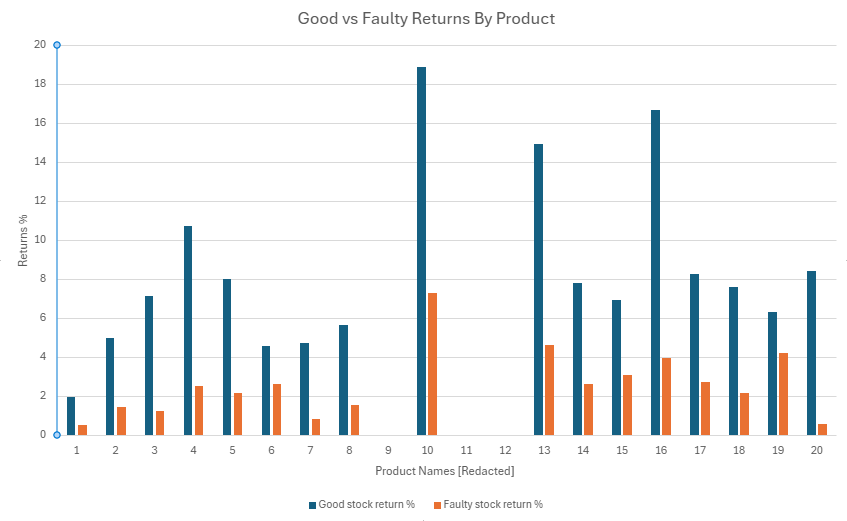
Poor literature and information can be a key factor in success or failure. Ensuring your sales pages are both selling the product but selling it accurately go a long way to reducing this gap.

The fragile first experience
The first interaction a customer has with a product often shapes their long-term relationship with it. If the initial setup goes smoothly, confidence grows. If something goes wrong, frustration can build quickly.
With technical products, this moment often occurs during:
- device setup
- network connectivity
- account registration
- accessory pairing
What can appear to the customer as a serious fault is more often a simple configuration issue.
Our support advisors resolve approximately 96% of first-time setup issues during the initial interaction, without the need for engineer dispatch or product replacement.
When customers receive fast and effective guidance during these early stages, the likelihood of a return drops significantly.

Loss of confidence
Customers don’t always return a product the moment a problem appears. The decision usually happens when confidence in the solution disappears.
Support conversations often follow a recognisable pattern. For example, at the beginning when the customer may sound uncertain:
“I’m not sure if I’ve set this up correctly.”
Later, if the issue persists or the customer struggles to find help, the tone can change:
“It might be easier to send it back.”
At this stage, the product itself may still be perfectly functional, but the issue comes down to confidence.
Providing accessible support and knowledgeable advisors can often restore confidence before the return decision takes hold.

Complexity and cognitive overload
Modern products are more capable than ever, but that capability often comes with increased complexity.
Smart televisions, connected appliances and digital ecosystems frequently require customers to navigate unfamiliar settings, apps or compatibility requirements.
When customers feel overwhelmed, returning the product can seem like the easiest solution.
Support interactions regularly reveal that many issues initially reported as faults are actually moments of confusion. For example, internal contact centre data shows that 77.6% of reported television product faults were resolved through guided troubleshooting rather than repair or replacement.
Clear onboarding guidance, accessible support resources and structured troubleshooting can significantly reduce these types of returns.
The rise of “buy, try, return”
Returns behaviour has also become increasingly normalised in online retail.
Research shows that 71% of UK online shoppers return items at least occasionally, reflecting how embedded returns have become within the ecommerce experience.
This behaviour is often linked to a trend known as “buy, try, return”, where customers purchase multiple items or variations with the expectation that some will be sent back.
While this behaviour may be unavoidable in some categories, clearer product guidance, compatibility tools and accessible support can reduce the need for customers to purchase multiple options in the first place.
Helping customers choose correctly at the outset remains one of the most effective forms of return prevention.

A different way to look at returns
Returns will always exist in retail, but many are preventable when organisations look beyond the transaction itself.
Behind so many returns is a customer who has lost confidence in the product or the experience surrounding it.
Understanding the psychology behind that decision gives retailers a powerful opportunity to intervene earlier, guide customers through moments of uncertainty and help more products remain where they belong: in customers’ homes.
For retailers and manufacturers alike, the key is recognising that the post-purchase experience plays a critical role in whether a product stays with the customer or enters the returns chain.
When customers feel supported, informed and confident in their purchase, the decision to return becomes far less likely.
We know this power and how to transform great sales – but returns headaches – into more profitable business, better customer retention and an overall brighter future, get in touch today to see how we could help you.