
Retail has become exceptionally good at removing friction from the buying journey.
Customers can now research, compare and purchase products in just a few clicks, often with next-day delivery and super-efficient checkout experiences. Significant investment goes into acquisition, conversion and getting products into customers’ homes as quickly as possible.
What we see every day is the importance of what happens after the sale: while a product may be easy to buy, it is not always easy to keep.

The real loyalty moment happens after checkout
For many retailers and manufacturers, the focus naturally sits on the point of purchase. Yet from a customer perspective, the experience is only just beginning once the product arrives.
This is often where confidence is either strengthened or lost.
Sometimes a setup process may feel unclear, there could be a connectivity issue, an unfamiliar feature or a product that does not behave as expected. All of this can quickly turn customer excitement into frustration. In many cases, these are not major faults, but they are moments where customers decide whether they trust the product and the brand behind it.
That is why post-purchase experience has become so important. Increasingly, loyalty is shaped less by how easy it was to buy something and more by how supported customers feel once they own it.

The hidden risk of post-purchase friction
Many product returns are not always driven by genuine hardware faults, but by uncertainty, lack of confidence or issues that were never resolved quickly enough.
By the time a customer reaches support, they may already be considering a return.
A great example of this is Freely TV. With technology constantly evolving, it’s becoming more common for users to come across new settings and services they’ve never seen before. Most people in the UK will already be familiar with Freeview, but recently another platform has started appearing on newer TVs — Freely.
Unlike Freeview, which relies on a traditional aerial connection, Freely is a free streaming service backed by the BBC, ITV, Channel 4 and Channel 5. Instead of using an aerial or satellite dish, Freely delivers live TV channels and on-demand content entirely through your internet connection. All you need is a compatible smart TV or streaming device connected to Wi-Fi.
One of the biggest differences users will notice is the setup process. With Freeview, setting up your channels usually involves connecting an aerial and running a channel scan. Freely simplifies this process significantly. Once your TV is plugged in and connected to your Wi-Fi network, you simply enter your postcode to complete the regional setup. There’s no need for an aerial, no channel tuning and no extra installation which makes it a much more modern approach to watching television.
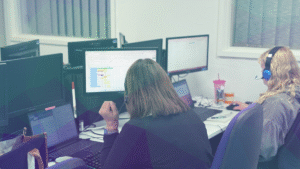
What matters in these moments is not simply resolving the technical issue: it is restoring confidence in the product, and we receive many calls each week on exactly this for Freely-based TVs. Dealing with customers who are unsure of their products often comes down to clear guidance, effective troubleshooting, reassurance and knowledgeable support.
When done well, the product stays in the customer’s home rather than entering the returns process.
Why retention is increasingly operational
Customer retention is often discussed in terms of marketing, loyalty schemes or pricing strategy. We see operational experience playing an equally important role.
A poor support experience can damage confidence very quickly, particularly in categories where products are more connected, software-driven or reliant on setup environments customers may not fully understand.
At the same time, a well-handled support interaction can strengthen trust in both the retailer and manufacturer.
This is where post-purchase support becomes commercially valuable.
Reducing unnecessary returns, avoiding repeat contacts and helping customers successfully use the products they purchase all contribute to stronger customer retention, lower operational cost, improved brand perception and longer product lifespan
Easy to keep is becoming a competitive advantage
As customer expectations continue to rise, retailers are increasingly judged on the full ownership experience, not simply the transaction itself.
Products that are easy to set up, easy to understand and easy to get help with create more confident customers and fewer avoidable problems downstream.
For retailers, that means support can no longer be viewed purely as a reactive function. It is a critical part of the customer journey and one that directly influences long-term value.
Ultimately, the brands customers remember and trust are not always the ones that sold them a product most quickly.